THE PRINCIPLE
Ink in, surface wiped
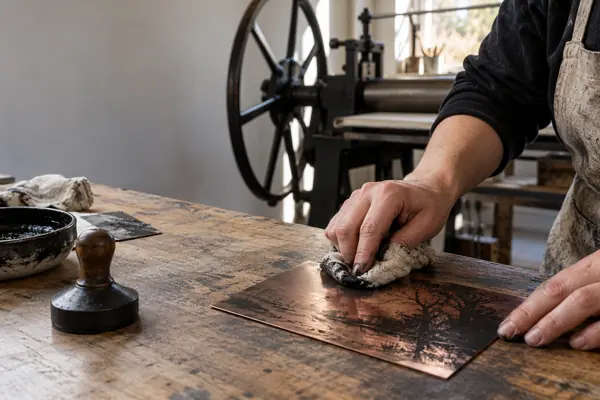
Intaglio covers any technique where the incised line or sunken area holds the ink. The plate surface is wiped clean, and heavy pressure transfers the ink to paper.
Compare techniques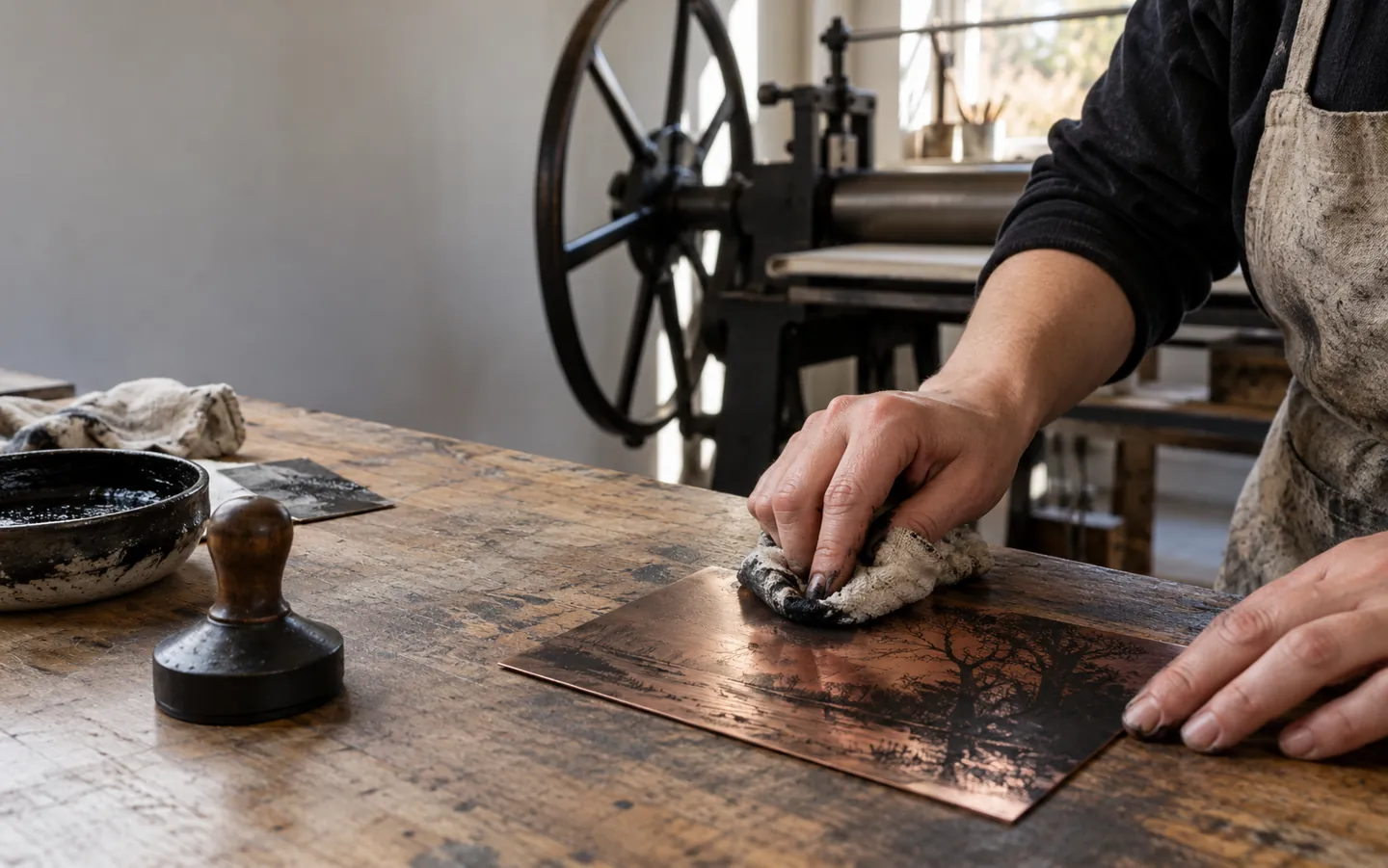
HOW THE PRINT IS MADE
c. 1430 first engraved prints, Germany
AI-generated image, not a photograph of a real person or place.
An etching is printed from what is cut into the plate, not what stands up.
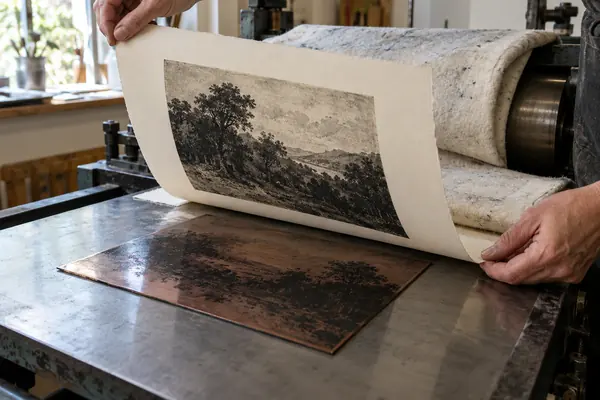
In intaglio printmaking the image is incised into metal, the plate is inked and wiped clean, and a press pushes paper against it with great pressure to pick up the ink. Etching, engraving, drypoint, aquatint and mezzotint are all versions of the same idea.
THE SHORT ANSWER
In a relief print the raised surface prints.
In intaglio the sunken lines do.
THE PRINCIPLE
Intaglio covers any technique where the incised line or sunken area holds the ink. The plate surface is wiped clean, and heavy pressure transfers the ink to paper.
Compare techniquesLINES
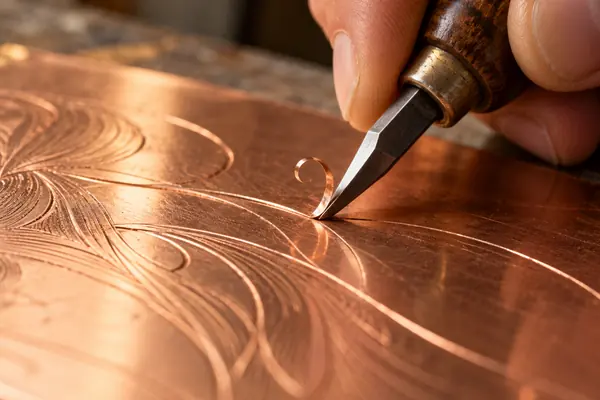
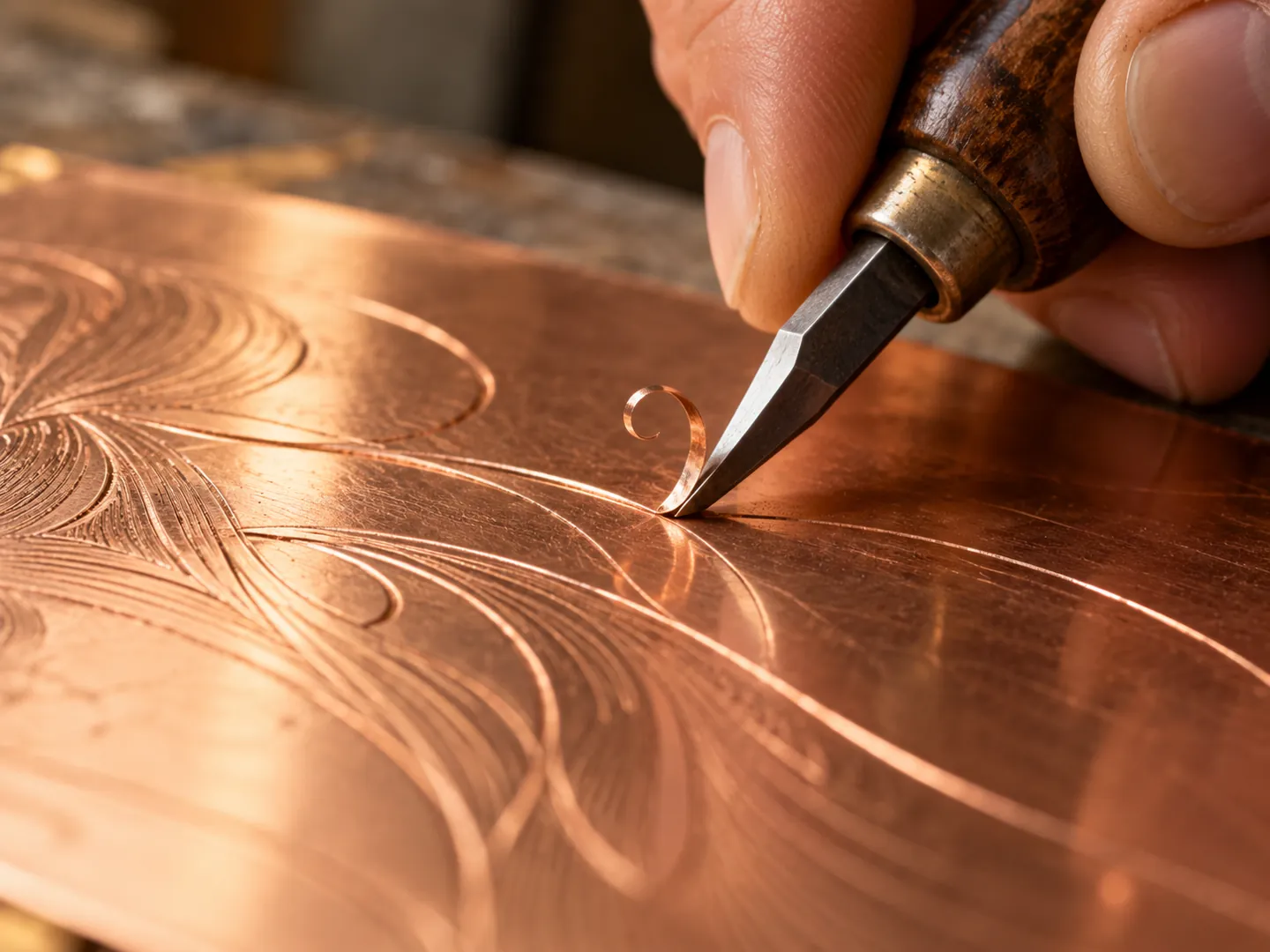
An engraver cuts lines with a burin, a fine chisel. An etcher draws through an acid-resistant ground and lets acid bite the lines; longer in the acid means deeper, darker lines.
How an etching is madeEDITIONS
Modern prints are usually limited. In an edition of 25 the prints are numbered 1/25, 2/25 and so on; extra proofs marked AP and PP go to the artist and printer.
Reading a print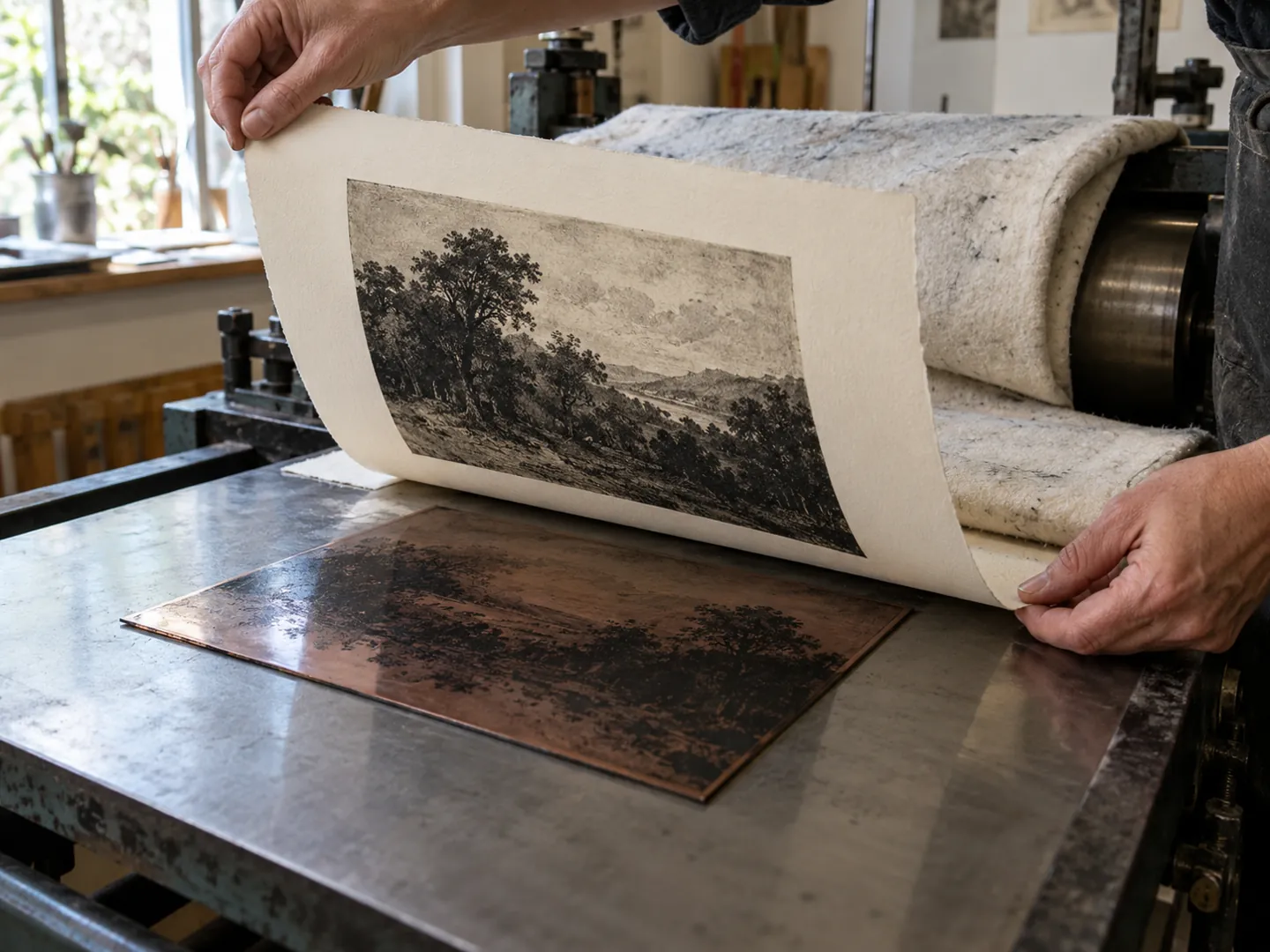
HOW AN ETCHING IS MADE
Tate's description of etching breaks into four stages. Traditional plates were copper; today they are usually zinc.
Cover the metal plate with an acid-resistant ground.
Draw the lines with a point, exposing bare metal wherever the image should print.
Immerse the plate. The acid bites the exposed lines; stronger acid or a longer bath gives deeper lines.
Remove the ground, ink the plate, wipe the surface clean and run it through the press against paper under great pressure.
TWO NUMBERS WORTH KNOWING
One date for the first engraved prints,
one range for modern edition sizes.
c. 1430
When engraved plates were first used for prints
Engraving metal was a way of decorating objects since classical antiquity, but Tate dates the first use of engraved plates for printing to about 1430 in Germany.
ENGRAVING · TATE
2–1,000+
Typical size of a modern limited edition
Since the late nineteenth century, prints from one plate have usually been restricted and declared a limited edition, anything from 2 to 1,000 or more. Before that, prints were often made in as many numbers as the process allowed.
EDITIONS · TATE
Etching was used to decorate metal from the fourteenth century, Tate notes, but probably not for printmaking much before the early sixteenth century.
A QUICK TECHNIQUE CHECK
Pick an intaglio technique to see how it marks the plate. The bar shows how far the technique is used for tone rather than crisp line.
Based on Tate's art terms for engraving, etching, drypoint, aquatint and mezzotint. Many prints combine several techniques on one plate.
READING A PRINT
Editioned prints are usually signed, numbered and often dated by the artist. An edition of twenty-five is numbered 1/25, 2/25 and so on. Where the edition is limited by the artist or publisher, the printing surface is usually destroyed afterwards.
AP marks an artist's proof and PP a printer's proof: finished impressions made in addition to the edition. A 'bon à tirer' (good to print) proof is the standard the printer works to. A number of working proofs may also be made along the way.
In conversation
Tate describes intaglio as any printing or printmaking technique in which the image is produced by incising into the printing plate, so that the incised line or area holds the ink and creates the image. Engraving, etching, drypoint, aquatint and mezzotint are all intaglio techniques.
Both print from lines sunk into a metal plate. In engraving the lines are cut by hand with a burin; in etching they are drawn through an acid-resistant ground and bitten into the metal by acid.
Drypoint lines have a raised, ragged edge called the burr, which gives the velvety look. Tate notes it is delicate, so printers usually stop before the press crushes it.
AP stands for artist's proof: a finished impression identical to the edition but made in addition to it, for the artist. PP is a printer's proof.
Mezzotint was developed in the seventeenth century. Tate says it became particularly popular in eighteenth-century England for reproducing portrait paintings.
Each figure on this page comes from the sources below.
ABOUT THIS NAME
doodleradprints.com is part of the DoodleSale portfolio. It isn't in an auction right now, but you can ask about leasing it.